
The Architecture of Togetherness: Designing CLT Homes for Human Connection
The spaces we inhabit shape the relationships we build. Yet for too long, residential architecture has been dictated by rigid assumptions about how families should live, isolated bedrooms, closed-off kitchens, and walls that divide rather than unite. At Arolla, we believe Cross Laminated Timber offers something profoundly different: the structural freedom to design homes around how people truly connect.
Open Spans, Open Lives
CLT’s remarkable structural capability eliminates the need for load-bearing interior walls, creating open-span possibilities that traditional construction simply cannot match. This isn’t merely an aesthetic choice, it’s a fundamental reimagining of domestic space. Without structural constraints dictating room divisions, families can create fluid, adaptable layouts that evolve with their needs: a dining area that expands for Sunday gatherings, a living space that transforms for children’s play, or a workspace that doesn’t isolate but integrates.
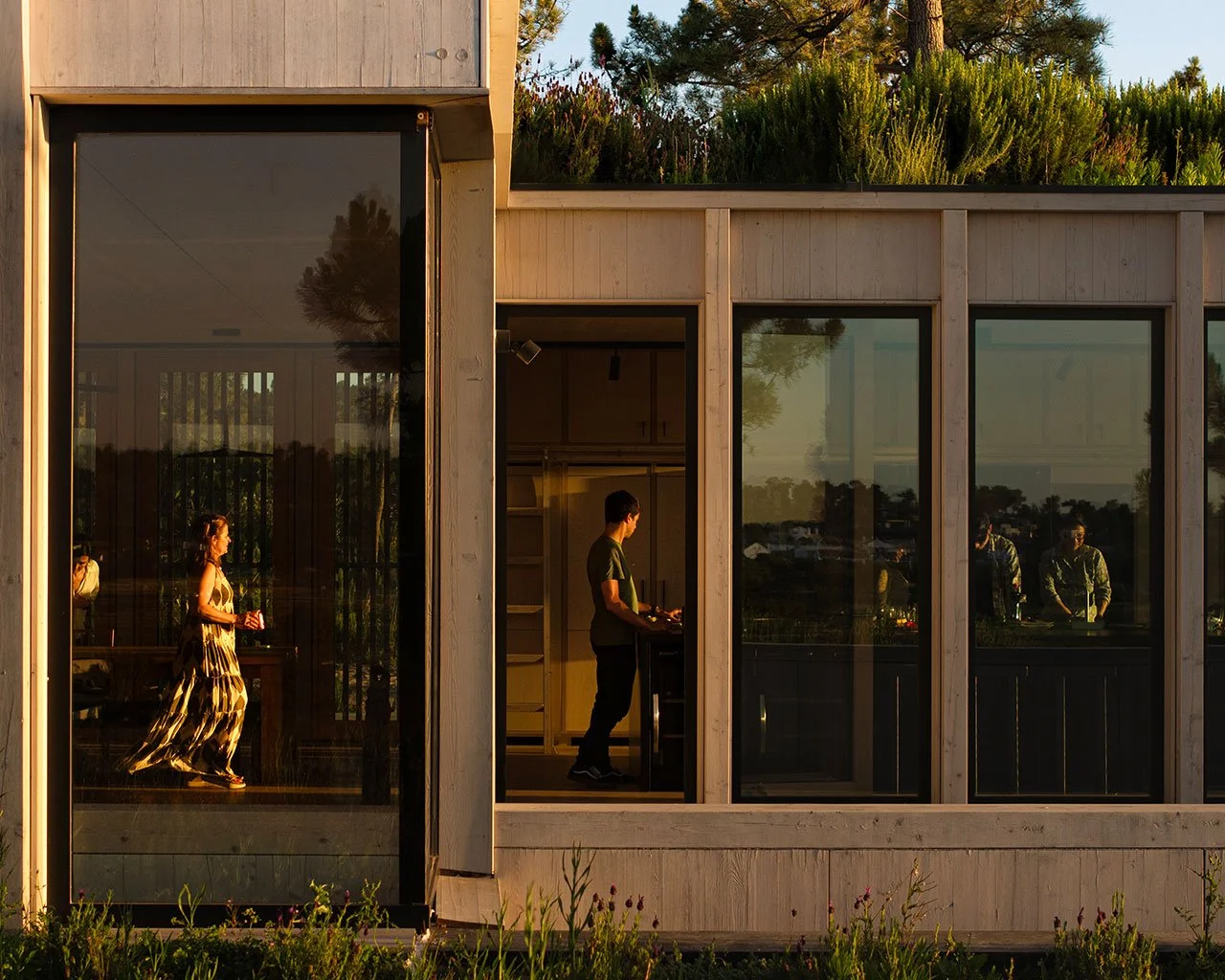
The beauty lies in flexibility. Where conventional construction forces families to adapt to the house, CLT allows the house to adapt to the family. This is architecture that respects the organic rhythms of shared life across generations.
The Sound of Home
There’s an intimacy to CLT spaces that goes beyond the visual. The material possesses exceptional acoustic properties,dampening external noise whilst preserving the natural warmth of human voices within. This acoustic intimacy creates what European researchers describe as “material warmth”, an environment where conversation flows naturally, where laughter resonates without harshness, and where the sounds of family life become part of the home’s character rather than an intrusion.
In an increasingly noisy world, this quality matters. CLT homes offer sanctuary without isolation, privacy without disconnection.
Threshold Moments
The most meaningful moments in domestic life often happen in transitional spaces, the veranda where morning coffee becomes conversation, the patio where dinner extends into storytelling, the covered entrance where departures linger. Arolla’s design philosophy recognizes these threshold spaces as social anchors, deliberately blurring the boundary between indoors and outdoors.
These aren’t afterthoughts but intentional design decisions. By creating generous transitional zones, we facilitate the spontaneous encounters and unhurried gatherings that build genuine connections. It’s in these liminal spaces that deepen relationships.
Proportions That Nurture
European research increasingly demonstrates the correlation between spatial generosity and emotional wellbeing.Ceiling heights, room proportions, and material warmth significantly affect our sense of belonging and ease. Higher ceilings promote creativity and expansive thinking; well-proportioned rooms reduce stress and enhance comfort; natural materials like wood create psychological grounding.
CLT construction enables these generous proportions economically. The material’s strength-to-weight ratio allows for dramatic ceiling heights and expansive volumes without the cost penalties of traditional construction. This is spatial generosity made accessible.
Rituals Over Rooms
Rather than designing homes as collections of isolated functional categories—bedroom, kitchen, office, Arolla’s approach centers on gathering rituals. How does your family share meals? Where do stories get told? What spaces support collective rest and individual reflection?
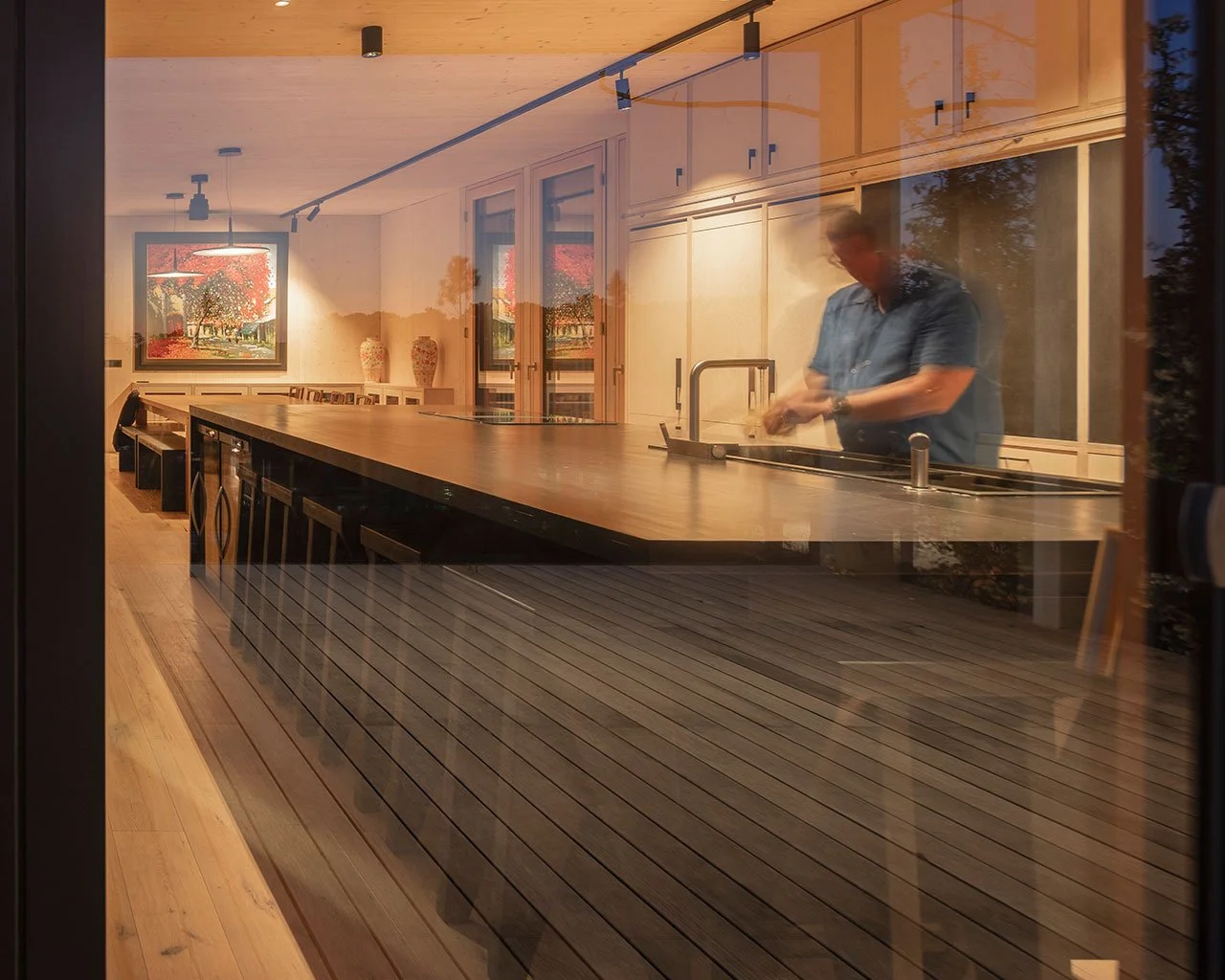
This philosophy recognizes that human connection doesn’t happen in categories. It happens around tables, in comfortable seating arrangements that encourage lingering, in kitchens open enough for multiple generations to cook together. CLT’s flexibility allows us to design for these rituals, creating homes that facilitate the small, repeated moments that constitute a shared life.
Community as Intention
At Arolla, community isn’t a single feature, it’s the guiding intention shaping every design decision. From the material selection that respects nature to spatial configurations that honours human connection, our CLT homes embody a philosophy of togetherness. This matters increasingly in a market where discerning clients seek not just sustainable properties, but homes that enhance quality of life.
The demand for sustainable housing continues to rise across Europe, driven by environmental awareness and recognition that our built environment profoundly affects wellbeing. CLT construction meets this moment, offering both ecological responsibility and human-centred design.
Building for What Matters
Architecture, at its best, doesn’t just provide shelter, it cultivates the conditions for human flourishing. By designing CLT homes around connection, shared rituals, and spatial generosity, Arolla creates environments where relationships thrive across generations. This is the architecture of togetherness: building not just for function, but for the irreplaceable warmth of shared life.