
Beyond Sustainability: How CLT homes awaken all five senses
Sustainable design has evolved beyond carbon calculations and energy ratings. Today’s discerning property developers and homeowners recognize that truly exceptional spaces engage all of our senses, creating environments where wellbeing and sustainability converge. Cross Laminated Timber (CLT) construction represents this evolution, a building methodology that doesn’t merely reduce environmental impact but actively enhances the human experience.
Touch: The Warmth of Natural Timber
The moment your hand meets a CLT wall, something remarkable happens. Unlike the cold sterility of concrete or steel, wood responds to human touch with inherent warmth. This isn’t merely aesthetic preference; research demonstrates that wooden interiors significantly reduce anxiety and positively influence mood in office and residential spaces.
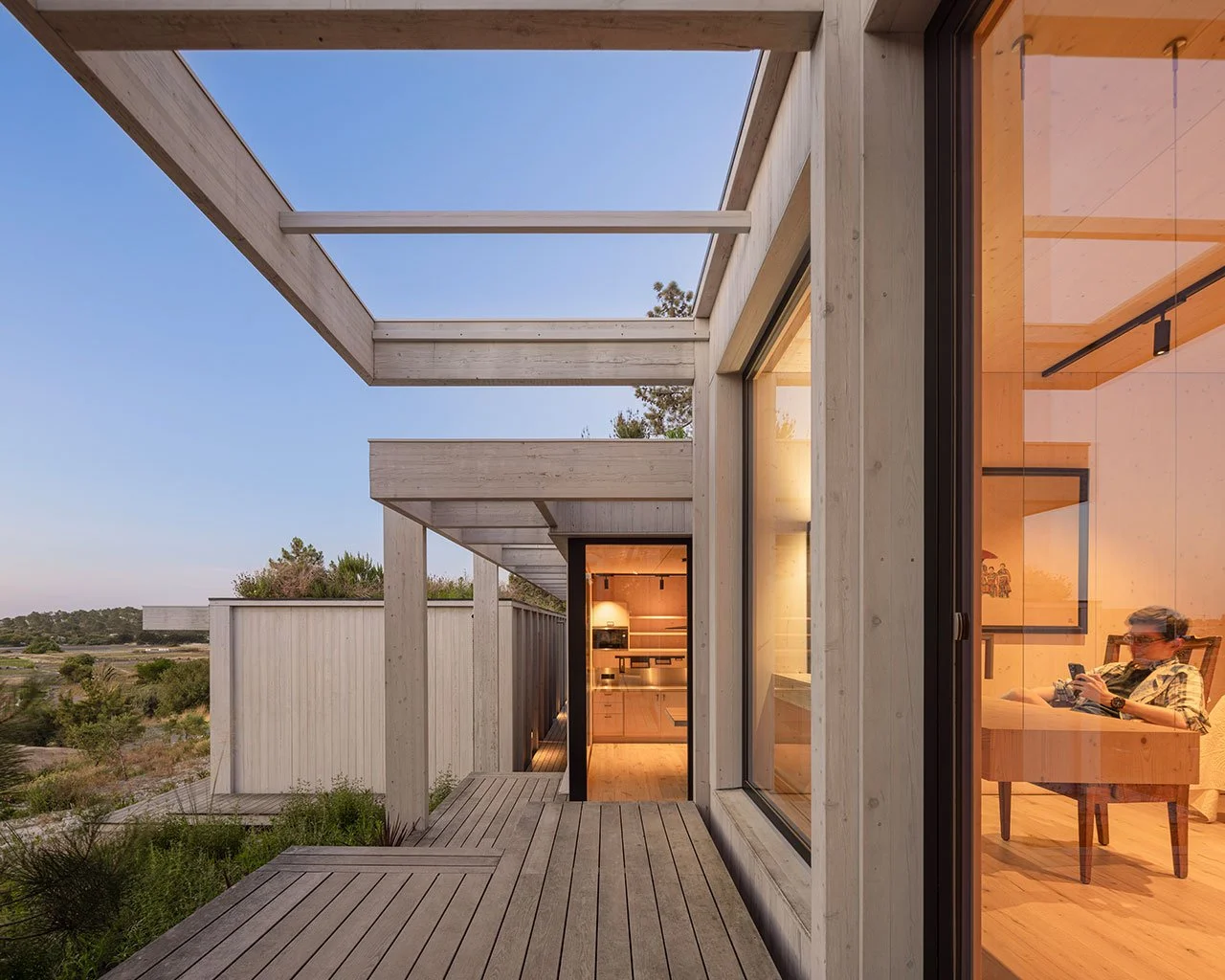
The natural texture of timber creates an immediate, tactile connection to nature, grounding occupants in an authenticity that synthetic materials simply cannot replicate. For developers focused on creating spaces that foster genuine connection across generations, this tactile quality becomes a silent ambassador of quality and care.
Vision: Light That Lives and Breathes
CLT’s visual impact extends beyond its natural beauty. Studies reveal that wooden interiors create a perception of warmth that actually influences thermal comfort, with wood-finished spaces perceived as significantly warmer than concrete or metal alternatives, even at identical temperatures.
This “visual warmth effect” means CLT buildings can potentially reduce heating loads whilst enhancing occupant comfort. The material’s ability to complement natural light creates spaces that feel alive, changing subtly throughout the day in ways that respect our circadian rhythms and support mental wellbeing.
Sound: The Architecture of Silence
In our increasingly noisy world, acoustic comfort has become a luxury. CLT’s dense, cellular structure naturally absorbs sound, providing superior noise control compared to traditional materials like concrete and steel.
This creates peaceful environments that promote concentration, relaxation, and restorative sleep, qualities particularly valued in multi-family residential developments and commercial spaces where acoustic privacy directly impacts quality of life and productivity.
Scent: The Breath of Pure Living
Whilst artificial fragrances often compromise indoor air quality, CLT contributes to genuinely pure air. Wood’s natural moisture-regulating properties create stable, comfortable environments that reduce humidity-related issues and promote healthier indoor conditions.
Unlike materials that off-gas volatile organic compounds, properly sourced and treated CLT supports the clean air that occupants increasingly demand. This aligns perfectly with the growing European emphasis on environmental health and sustainable living standards.
Proprioception: Comfort You Feel in Your Bones
Perhaps most remarkably, CLT influences our proprioceptive sense, that unconscious awareness of our body in space. The material’s exceptional insulating properties and high thermal mass help maintain consistent temperatures, absorbing heat during the day and releasing it as temperatures drop.

This thermal stability creates an environment where the body simply feels right, reducing the physiological stress of temperature fluctuations and contributing to overall wellbeing in ways occupants may not consciously recognise but deeply appreciate.
The Holistic Impact: Meeting Market Demand
Europe’s sustainable property market is experiencing unprecedented growth, with the European Commission’s 2026 Affordable Housing Plan explicitly promoting sustainable, high-quality living standards and circular building principles. As climate risk becomes the second most important ESG credential for accessing finance, cited by 83% of real estate leaders, CLT construction positions developers at the intersection of market demand and genuine innovation.
By engaging all five senses, CLT homes don’t simply meet sustainability criteria; they create living environments that honour our fundamental human need for connection, to nature, to community, and to spaces that support rather than deplete our wellbeing. This is building for generations, not just for today.