
The Surprising Fire Resilience of CLT
In the realm of sustainable construction, Cross Laminated Timber (CLT) has emerged as a revolutionary material that marries environmental responsibility with structural excellence. Yet, despite its growing popularity, misconceptions regarding its fire performance continue to persist. At Arolla, respect for nature guides our approach to sustainable homes, and we believe in addressing these concerns with scientific clarity.
The Science of Wood’s Natural Protection
When exposed to fire, CLT exhibits a fascinating natural defense mechanism through controlled charring. Unlike conventional materials that lose structural integrity rapidly when heated, timber forms a protective char layer at approximately 0.65mm per minute. This carbonized shield has remarkable insulating properties, preserving the unaffected wood beneath.
Thescience is compelling: as the char layer develops, it creates a barrier that both restricts the oxygen supply and slows the heat transfer to the unburned timber core. This self-protecting characteristic means the structural integrity of CLT elements remains predictable and stable during fire exposure; a crucial consideration for safety-conscious houses.
Fire Testing: Real-World Performance
CLT’s fire performance isn’t theoretical. It’s rigorously tested and documented. Studies conducted across European testing facilities demonstrate that properly designed CLT structures can achieve fire resistance ratings of 90+ minutes, comparable to or exceeding many traditional construction materials.
In controlled testing environments, CLT panels maintain their load-bearing capacity significantly longer than anticipated . This predictable behavior allows engineers to design with confidence, knowing precisely how the material will respond in emergency situations.
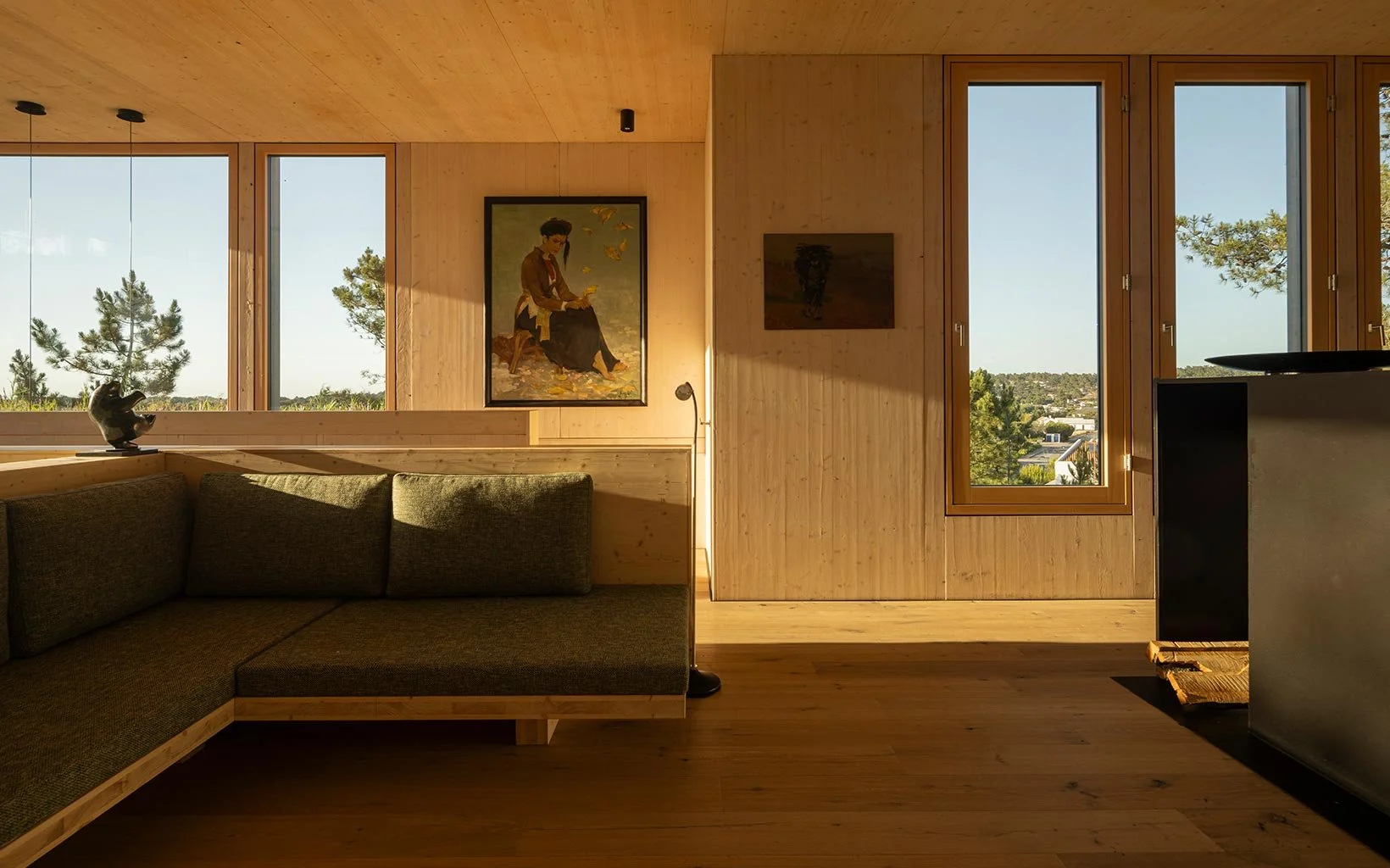
The documented performance of CLT in real fire incidents further validates these laboratory findings. Modern CLT buildings have demonstrated exceptional resilience, with the structural timber elements remaining functional even after severe fire exposure; a testament to the material’s inherent fire resistance capabilities.
Regulatory Compliance: Meeting and Exceeding Standards
Across Europe, building codes have evolved to acknowledge CLT’s fire-resistant properties. The Eurocode 5 (EN 1995-1-2) provides specific guidance for designing timber structures with fire resistance, recognizing that properly engineered CLT buildings can satisfy the most stringent safety requirements.
For anyone concerned with compliance, it’s worth noting that CLT structures routinely achieve the same fire ratings required as that of conventional buildings. The path to approval is well-established, with clear guidelines for demonstrating regulatory compliance throughout the design and construction process.
Material Comparison: Challenging Traditional Perceptions
When comparing CLT to traditional materials, several counterintuitive advantages emerge. Unlike steel, which can warp and collapse suddenly when reaching critical temperatures, CLT’s behavior remains predictable. Concrete, while non-combustible, can experience explosive spalling under extreme heat, compromising structural integrity.
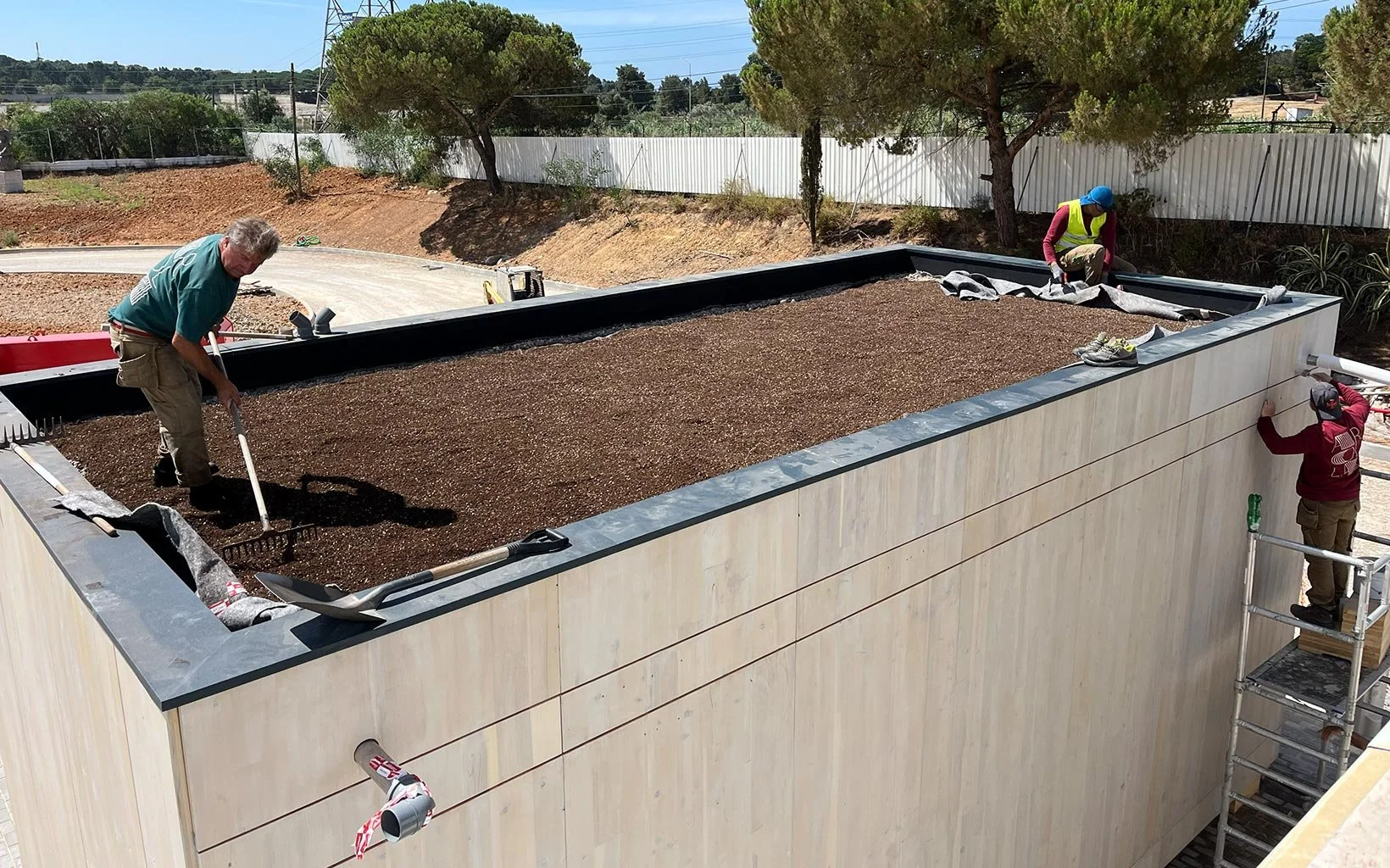
CLT, by contrast, maintains its structural capacity as the charring progresses at a measurable, predictable rate. This predictability is invaluable for fire safety strategies, allowing for more precise evacuation timing and structural performance expectations. In some documented cases, timber beams have survived fires where steel beams have deformed and failed.
Design Considerations for Optimal Fire Performance
For optimal fire performance in CLT structures, several design considerations must be addressed:
Strategic encapsulation of CLT elements using non-combustible linings in areas requiring enhanced fire protection;
Thoughtful detailing of connections, which preserves the overall fire resistance of the structure;
Comprehensive approach to fire safety that includes appropriate detection and suppression systems.
At Arolla, these considerations are integrated into our design philosophy from inception, ensuring that our CLT homes offer not just environmental benefits but uncompromised safety.
The Future of Safe, Sustainable Construction
As we continue to build connections between generations through our sustainable CLT homes, we remain committed to advancing both the safety and environmental credentials of our construction methods. The scientific evidence is clear: when properly designed and implemented, CLT structures offer excellent fire performance while contributing to our collective responsibility toward natural resource preservation.