
Designing for Mental Wellbeing: The Psychological Benefits of Wooden Architecture
In today’s rapidly urbanizing world, the materials we choose to surround ourselves with have never been more important. At Arolla, we understand that our built environments significantly impact not just our physical health, but our psychological wellbeing too. Cross Laminated Timber (CLT) architecture offers more than sustainability; it provides a profound connection to nature that nurtures our mental health. But what does science say about this relationship?
The Science of Stress Reduction: Wood’s Measurable Impact
Research consistently demonstrates that exposure to wooden environments yields quantifiable psychological benefits. Studies have shown that visible wood surfaces in interior spaces correlate with decreased cortisol levels; the primary hormone associated with stress. Participants in wood-rich environments exhibit lower blood pressure and reduced heart rates compared to spaces lacking natural materials.
In one particularly revealing study, participants performing cognitive tasks in rooms with exposed timber surfaces demonstrated improved concentration and focus compared to control groups in conventional settings. For commercial environments, this translates to measurable improvements in employee productivity and job satisfaction, with surveys indicating that timber-enhanced workplaces correlate with reduced absenteeism.
Biophilic Design: Nature’s Architecture in CLT
These benefits are elegantly explained through the concept of biophilia; our innate affinity for natural systems. Biophilic design principles, when implemented through CLT architecture, create spaces that respond to our evolutionary programming.
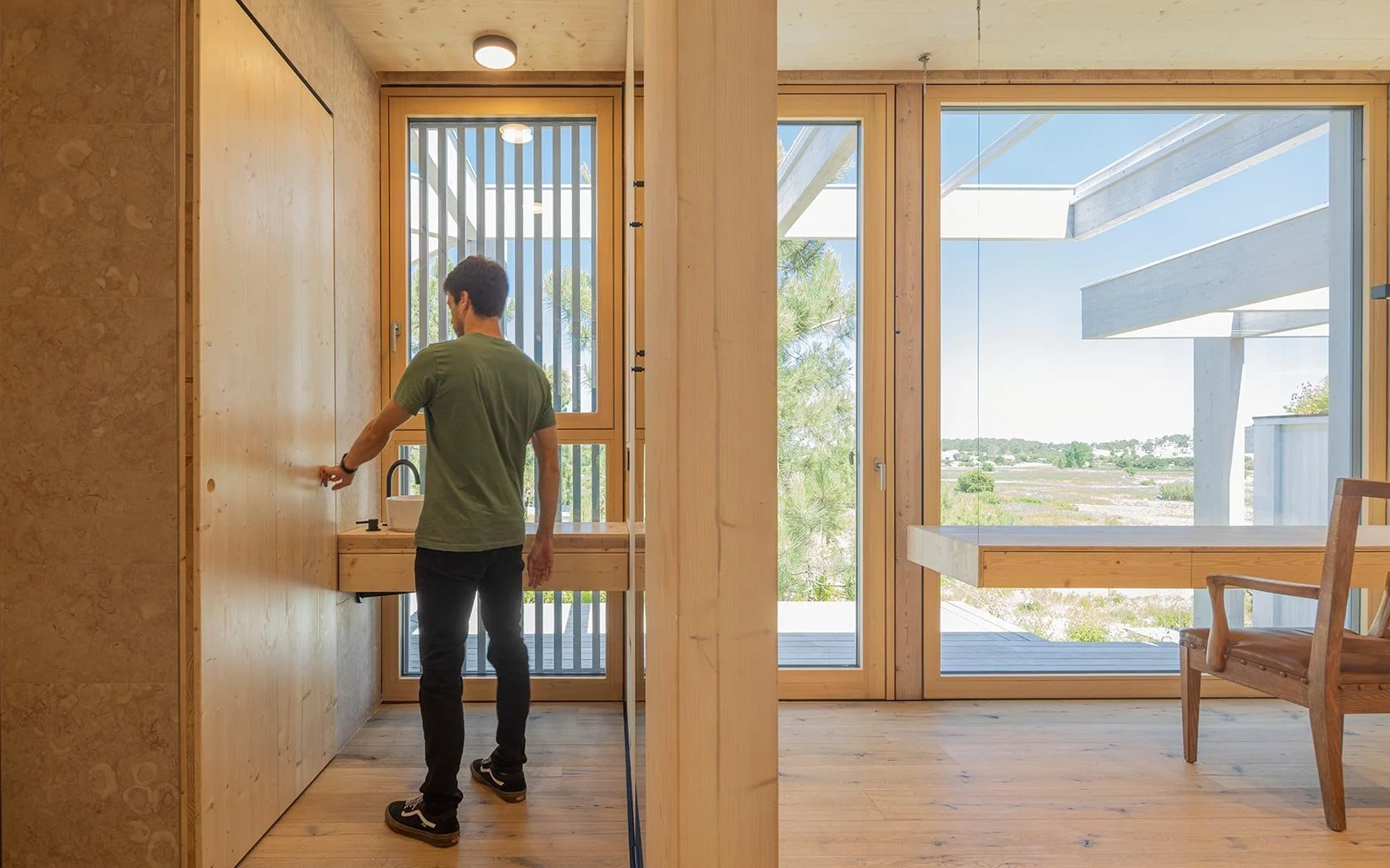
The term “biophilia” translates to “the love of living things” in ancient Greek. Although seemingly modern, the concept was first explored by psychologist Erich Fromm in 1964, then popularized by biologist Edward O. Wilson in the 1980s as urbanization increasingly disconnected humans from nature.
CLT construction excels at implementing the three foundational categories of biophilic design:
Nature in the space: Timber structures provide direct visual connections to natural materials.
Nature of the space: CLT buildings can create refuge areas that mimic protective spaces found in nature.
Natural analogues: Exposed timber surfaces display organic patterns, textures, and warmth that evoke natural environments.
The Sensory Experience of Wooden Architecture
The psychological benefits of wooden architecture extend beyond the visual realm into a complete sensory experience. Timber buildings engage multiple senses:
Touch: Wood’s relatively low thermal conductivity creates surfaces that feel warmer to the touch than concrete, steel, or glass, providing thermal comfort.
Sound: Timber structures offer excellent acoustic properties, reducing echo and creating balanced auditory environments.
Smell: The subtle natural aroma of timber evokes positive associations with forests and natural settings.
Sight: The visual variety of timber grain patterns reduces monotony fatigue and provides just enough complexity to maintain interest without overwhelming.
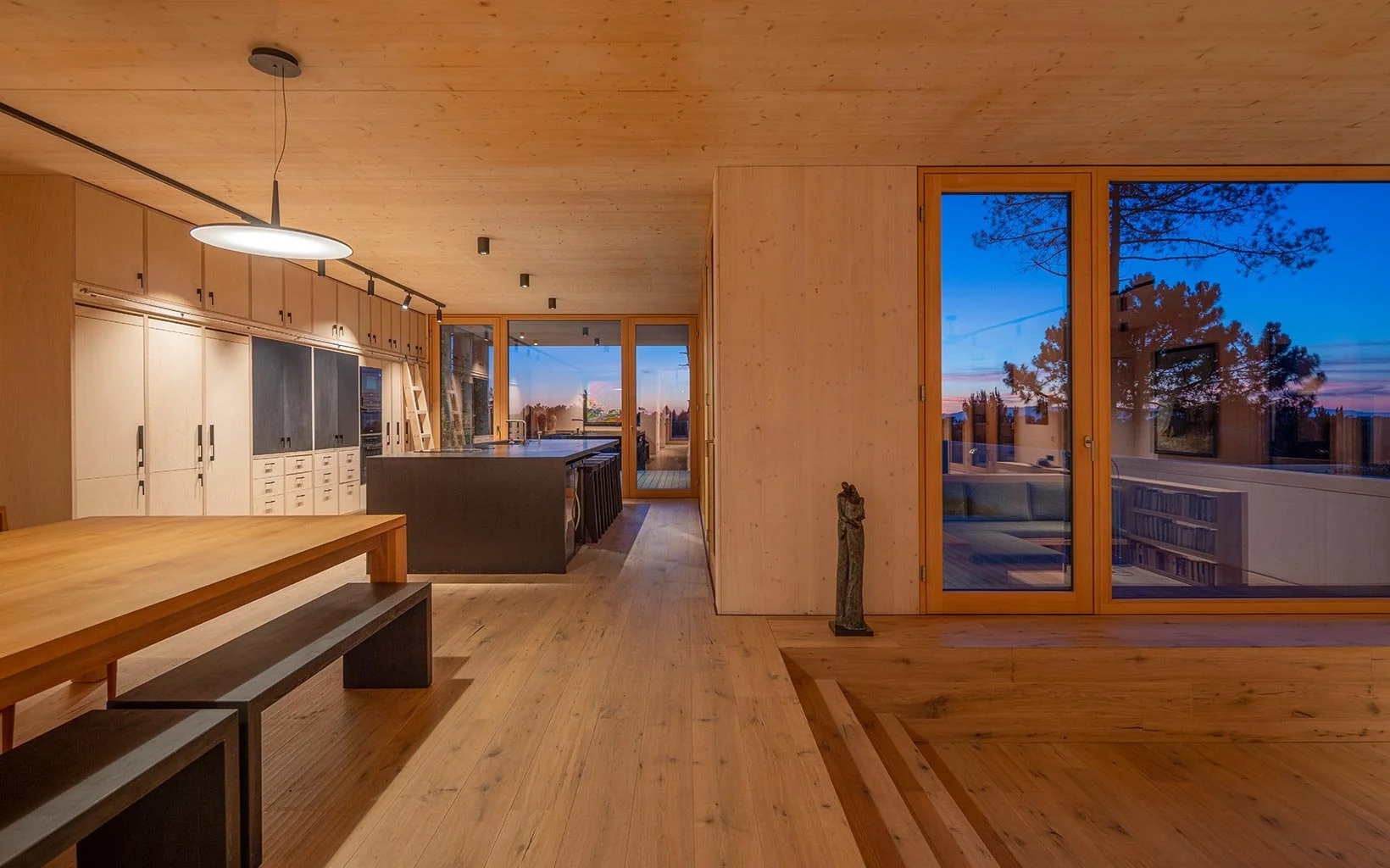
Particularly noteworthy is wood’s natural ability to regulate indoor environments. As a porous material, timber absorbs moisture when humidity is high and releases it when the air is dry, creating more comfortable and stable living conditions.
Implementing Research: Practical Design Approaches
At Arolla, we translate these research findings into practical design approaches that maximize psychological benefits:
Strategic exposure to CLT structural elements to create visual connections with natural materials
Integration of timber with other natural elements like abundant natural light and indoor plantings
Preservation of visible wood grain patterns rather than concealing them beneath synthetic finishes
Design of varied spaces that provide both prospect (open areas) and refuge (intimate nooks).
These evidence-based strategies create environments that respect both human psychological needs and the natural world; a perfect embodiment of our commitment to community, connection, and respect for nature across generations.
As our understanding of biophilic design principles deepens, wooden architecture (especially using advanced materials like CLT) stands at the forefront of creating spaces that nurture both human wellbeing and environmental sustainability. The mind-wood connection isn’t merely aesthetic preference; it’s a scientifically validated approach to architecture that honors our innate relationship with the natural world.